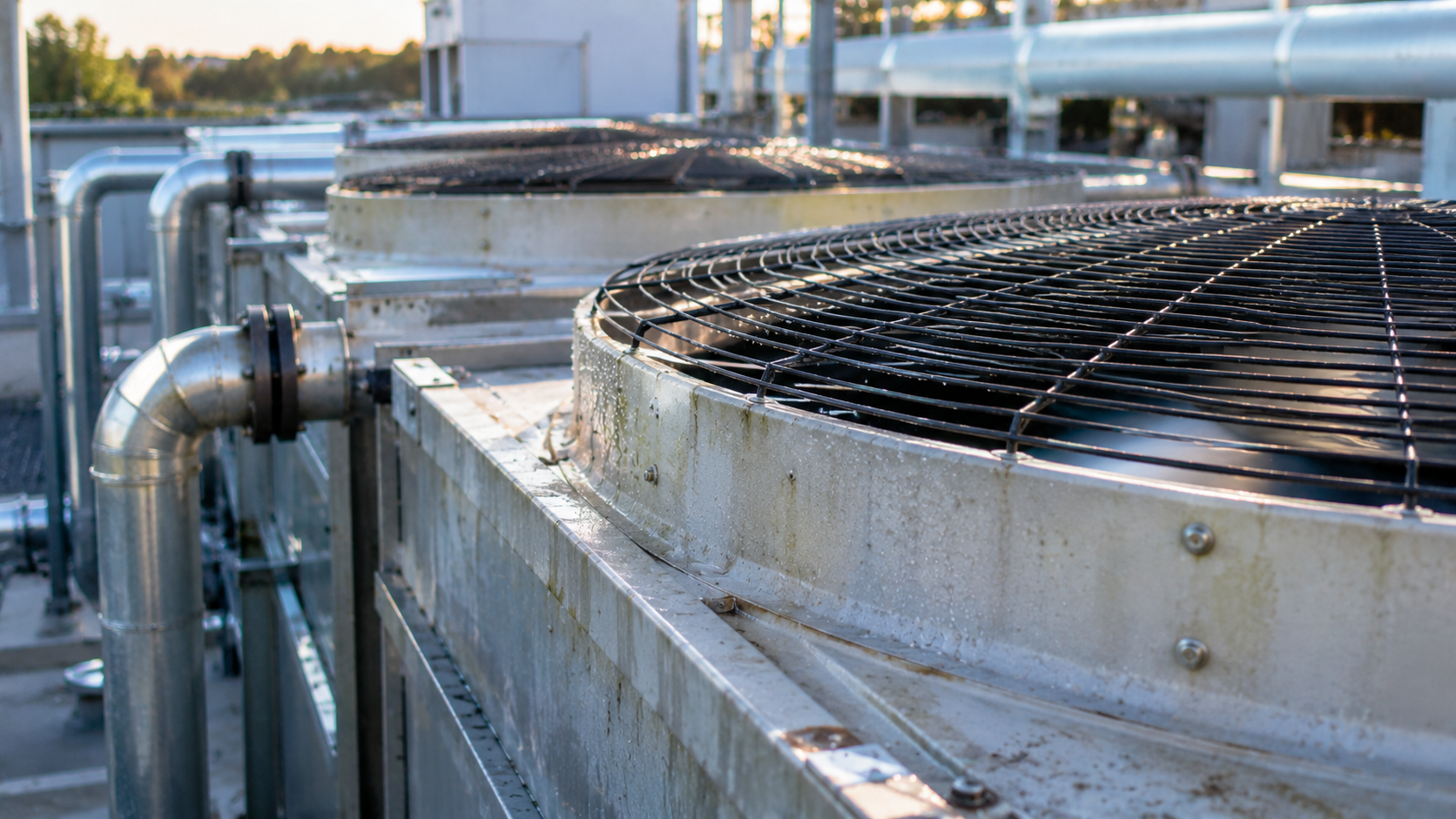
It’s not often that cooling towers go from working perfectly to breaking down without some kind of warning. Often, there are small changes in how the system sounds, operates or performs that suggest something isn’t quite right.
These early signs are easy to overlook, though, especially in busy commercial and industrial facilities where maintenance teams have a variety of equipment that demands their attention.
A little noise or a motor running hotter than usual might not seem urgent; however, recognising these warning signs early can help prevent expensive repairs and unexpected downtime.
So, what should you be looking and listening for?
1. Unusual noises that weren’t there before
You’re probably familiar with what your cooling tower normally sounds like. So when something changes, it’s worth paying attention.
Grinding, rattling, squealing or loud noise can indicate problems with fan bearings, motors, gearboxes or other mechanical components. A loose component might start as a small rattle, while a worn bearing may produce a more consistent grinding sound.
These noises don’t always mean your cooling tower will break down, but they shouldn’t be ignored. Identifying the source early can prevent further damage to connected equipment.
2. Your cooling tower isn’t cooling as effectively
Has your cooling tower started struggling to maintain its usual water temperature? Reduced cooling performance can develop gradually, making it difficult to notice until the system is under greater demand.
Several issues could be responsible, including fouled fill media, blocked spray nozzles, poor airflow or uneven water distribution. For example, a blocked nozzle can create uneven water distribution across the fill, reducing the surface area available for effective heat transfer.
If the system is working harder to achieve the same result, it’s worth investigating rather than just adjusting operating settings.
3. Vibration is becoming more noticeable
Generally, mechanical equipment vibrates. The important thing is recognising when vibration levels change.
Excessive vibration can point to fan imbalance, misalignment, worn bearings or loose mountings. Left unchecked, these problems can place additional stress on motors, drive components and supporting structures.
Regular mechanical inspections and vibration monitoring can help identify developing faults before they cause more extensive damage.
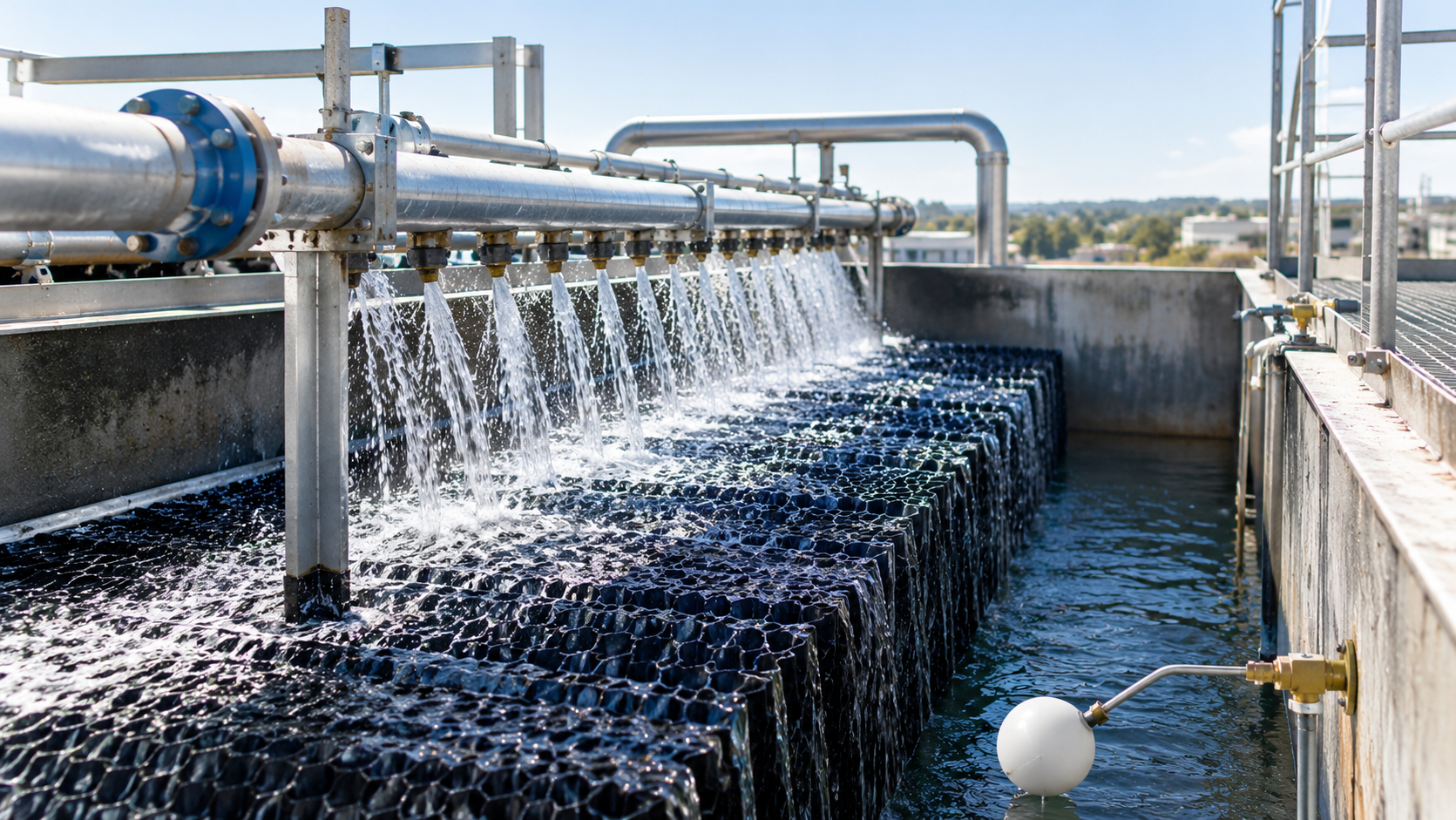
4. Water levels or flow patterns seem different
Water flow changes can be a sign that there is a problem. You might notice uneven distribution, reduced flow, unusual splashing or water levels that don’t appear consistent with normal operation.
Potential causes include blocked strainers, pump issues, faulty make-up water controls or restrictions within the system. Low water levels can affect pump operation, while poor distribution can reduce cooling performance.
Instead of treating these changes as nothing important, investigate what’s causing them. Water flow is central to how a cooling tower operates.
5. Corrosion, scale or deposits are becoming visible
A little discolouration might not attract much attention during a routine inspection, but visible changes to cooling tower components can provide useful clues. Rust, mineral scale, biological deposits or deteriorating surfaces may indicate issues with water treatment or component condition.
Scale can restrict water flow and reduce heat transfer efficiency, while corrosion can weaken components over time. Visible deposits don’t always reveal the full extent of a problem, either. Similar conditions may be developing in areas that are harder to inspect.
Regular inspections, appropriate water treatment and timely repairs can help manage these risks.
6. Energy consumption is increasing
Sometimes the first sign of a cooling tower problem isn’t something you can see or hear. It’s a change in operating performance.
If fans or pumps are consuming more energy than usual, or running longer to meet the same cooling demand, the system may be compensating for reduced efficiency. Fouling, mechanical wear, airflow restrictions and control issues can all contribute.
Of course, energy consumption also changes with weather conditions and cooling demand, so it’s important to compare performance under similar operating conditions. Looking at trends over time can help identify changes worth investigating.
Don’t wait for a breakdown to take action
The best way to recognise potential problems is to understand what’s normal for your system. Keeping records of operating temperatures, water flow, vibration levels and maintenance findings makes it easier to identify changes before they become serious.
If something doesn’t seem right, arrange an inspection. Waiting until equipment fails can mean urgent repairs, replacement parts, operational disruptions and unnecessary downtime.
At Cooling Tower Solutions, we provide cooling tower repairs and servicing for commercial and industrial facilities across South East Queensland. Contact us to find out more.