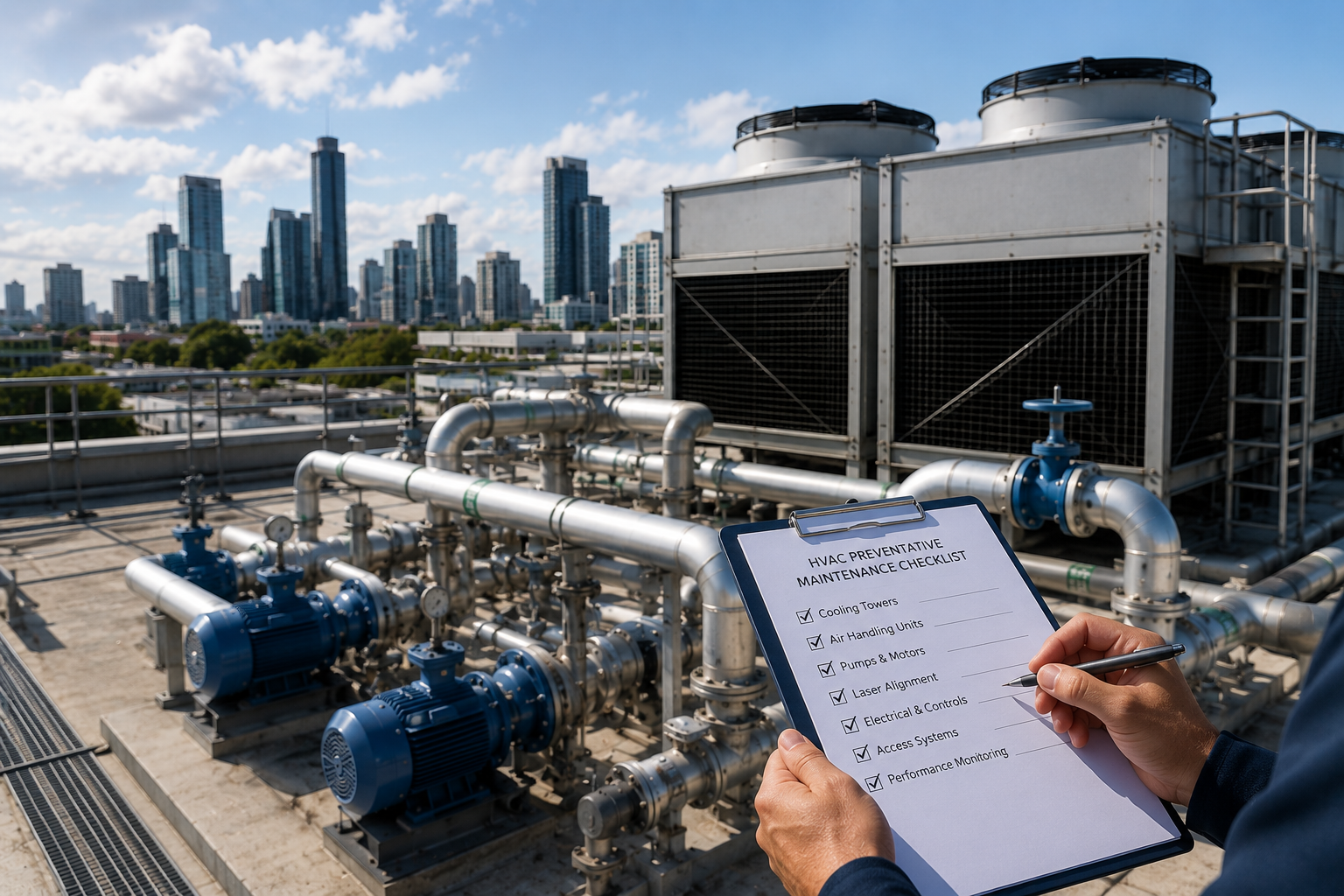
Commercial HVAC systems are made up of dozens of moving parts working together. From cooling towers and pumps to chillers, air handling units, motors and control systems.
And, like any mechanical equipment, these systems perform best when they’re regularly inspected, serviced and maintained. Small adjustments, routine checks and planned servicing can have a big impact on performance, energy efficiency and the life of your equipment.
A preventative maintenance program provides a structured approach to keeping your HVAC assets operating as they should while helping identify wear, performance issues and potential failures before they affect your site.
The ultimate HVAC preventative maintenance checklist
A comprehensive maintenance program should include:
- Cooling tower inspections and servicing
- Air handling unit (AHU) maintenance
- Pump and motor inspections
- Laser alignment of rotating equipment
- Electrical and controls testing
- Access system and safety inspections
- Performance monitoring and reporting
Each of these areas plays a critical role in the overall health and efficiency of your HVAC system.
Cooling tower maintenance
Often, cooling towers are the hardest working asset in a commercial HVAC system. Operating in challenging environments, they are continuously rejecting heat from the building. Over time, scale build-up, biological growth, corrosion and debris accumulation can reduce cooling efficiency. Fan assemblies, motors and drive systems are also subject to wear and vibration that can impact the performance of your system.
Routine cooling tower maintenance should include inspection of fill packs, drift eliminators, water distribution systems, fan assemblies and basins. Water treatment programs should also be regularly reviewed so the system remains compliant and operates at peak performance. Ignoring cooling tower maintenance often results in higher energy consumption, increased equipment wear and reduced system performance.
Air handling units – not just filter changes
Yes, filter maintenance is important; it represents only a small part of the overall servicing for air handling units. They should be routinely inspected for coil cleanliness, fan performance, belt condition, bearing wear and damper operation. Dirty coils can have a big impact on heat transfer efficiency, while worn belts and bearings place additional stress on motors and fan assemblies.
Regular maintenance helps maintain airflow performance, improve indoor air quality and reduce unnecessary energy consumption throughout the building.
Pumps and motor maintenance
Pumps and motors circulate chilled water, condenser water and process fluids in commercial HVAC systems. Small issues with seal wear, bearing deterioration or motor alignment affects system performance. If pumps are operating outside their design parameters, they will also consume more energy while underperforming.
Routine pump inspections should include vibration monitoring, bearing assessment, seal inspections and performance testing. Identifying problems early can prevent major failures and extend the life of your equipment.
The importance of laser alignment
Equipment alignment is often overlooked. Misaligned pulleys, couplings and shafts put unnecessary stress on motors, bearings and rotating equipment. This can lead to increased vibration, premature wear and reduced energy efficiency.
Precision laser alignment allows technicians to accurately identify and correct alignment issues before they result in expensive breakdowns. If your facility is operating multiple pumps, fans and motors, regular alignment checks go a long way to improve reliability and reduce maintenance costs over time.
Electrical systems and controls
Modern HVAC systems rely on automation, controls and electrical infrastructure. Sensors, variable speed drives, contactors and control systems must be tested and inspected as part of a preventative maintenance program. Loose electrical connections, faulty sensors or deteriorating components can cause performance issues that may not be immediately obvious.
Regular testing helps ensure equipment is operating correctly.
The benefits of a preventative maintenance program
Investing in routine HVAC maintenance provides several long-term advantages:
- Reduced equipment downtime
- Lower energy consumption
- Extended equipment lifespan
- Fewer emergency repairs
- Improved system reliability
- Better safety and compliance outcomes
Partner with HVAC specialists
At Cooling Tower Solutions, we specialise in preventative maintenance, repairs and servicing for cooling towers, pumps, air handling units, electric motors and associated mechanical HVAC systems.
Our trade-qualified team works with commercial and industrial clients across South East Queensland, providing practical solutions backed by real experience.
For more information about HVAC system maintenance, contact Cooling Tower Solutions today for a program tailored to your operations.